La Sorga

Aude - Languedoc, FR
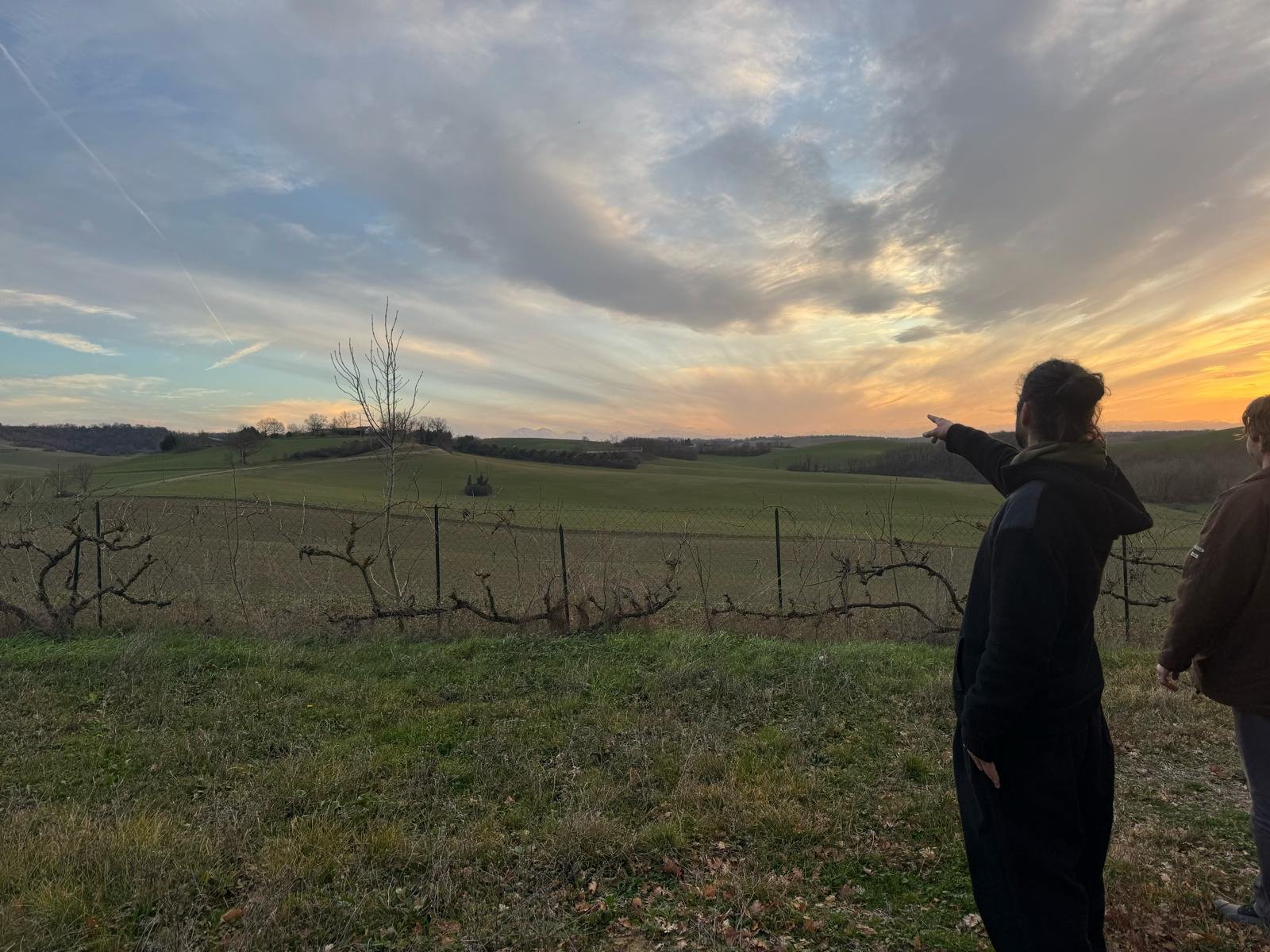
Antony Tortul, known to most simply as Anto, was born in the foothills of the Pyrenees in Ariège, a region where mountains and wilderness press close to daily life. He studied chemistry in Toulouse, but everything changed in 2001 with the explosion of the AZF fertilizer plant. The disaster, both human and environmental, left a lasting impression and led Anto away from industrial science toward a more immediate relationship with the living world.
He apprenticed throughout the south of France, working in Bergerac, Fitou, Corbières, and Châteauneuf du Pape, learning vineyards and cellars through experience rather than theory.
In 2008, he founded La Sorga, not as a fixed estate, but as a nomadic project. Instead of acquiring large holdings, Anto sought out forgotten parcels of old vines, often between forty and one hundred years in age. These vineyards, cultivated without chemicals, were scattered across remote corners of Languedoc and Roussillon. Clay limestone, schist, basalt, granite, and quartz each found their way into his wines. So too did a wide range of varieties, including Carignan, Cinsault, Aramon, Grenache, Terret, Mauzac, Muscat, and Mourvèdre.
From the outset, his approach was uncompromising. All fruit is harvested by hand. Fermentations are spontaneous. Aging takes place in concrete, amphora, or fiberglass tanks. There is no fining, no filtration, and no added sulphur.
Whites often see macerations of around forty days, gaining structure and dimension, while the reds balance the intensity of the southern sun with freshness and lift. All wines are bottled as Vin de France, free from appellation constraints.
Recently, Anto has made home in Aude, approximately 1km from Ariege. With plans to plant vines, it seems La Sorga’s nomadic beginnings may end, slowly becoming rooted in place with time.
The labels are as expressive as the wines themselves. Colorful, irreverent, and unapologetic, they reflect Anto’s refusal to soften or sanitize what he makes.
The wines of La Sorga are often intensely aromatic and charged with energy. They can be raw, immediate, and at times demanding, yet they remain unmistakably alive. They speak of forgotten grapes, fractured soils, and the freedom found in risk. In a region long shaped by volume and uniformity, Anto stands apart. Often imitated, never replicated, he reminds us that wine can be both playful and profound, capable of turning disorder into something unexpectedly beautiful.