Les Petites Mises
Quarante - Languedoc, FR

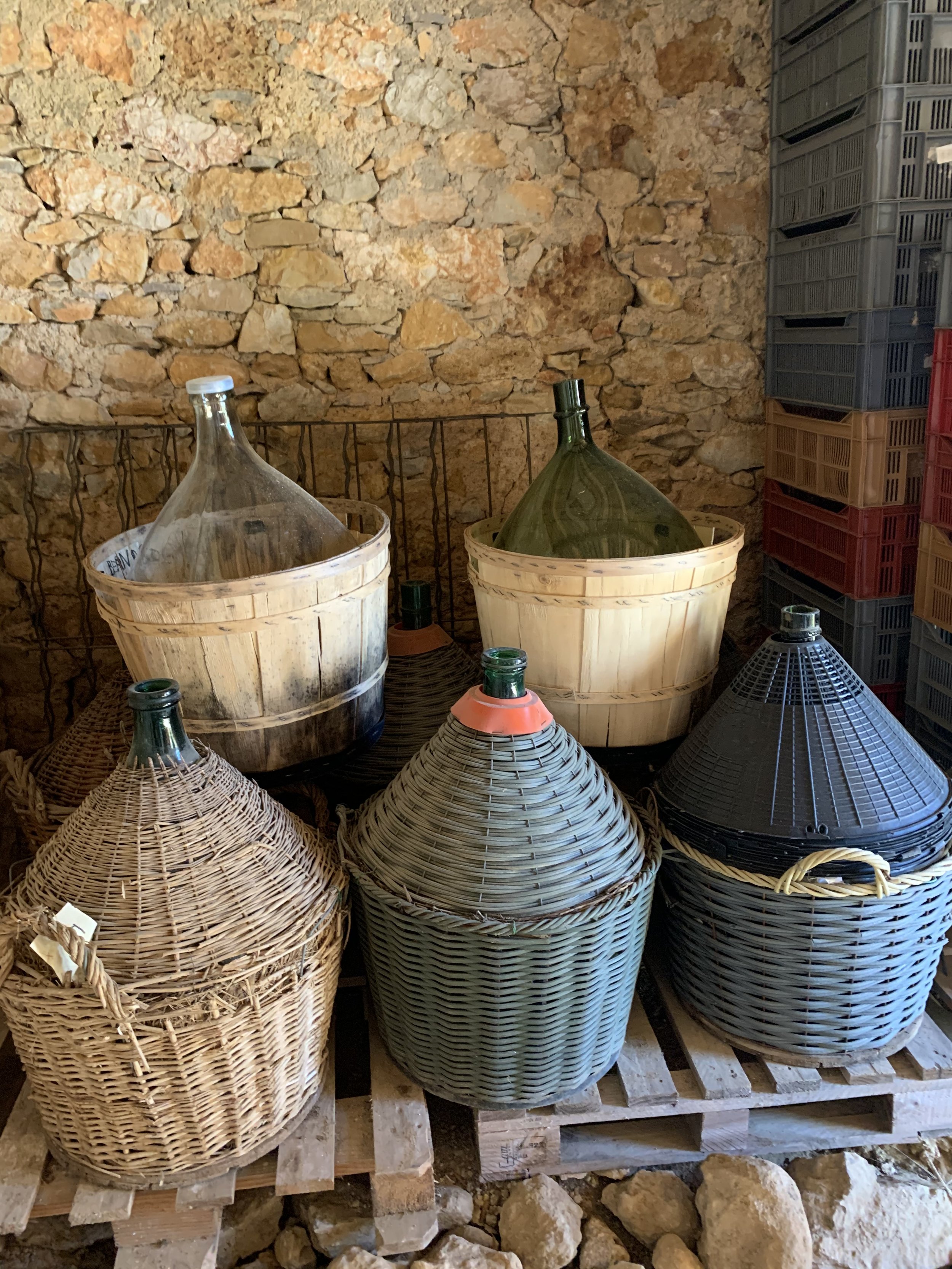
Etienne and Nathalie first met in the Ardèche, where they began discovering wine together. Those early years were shaped by long drives across France, visiting winemakers they admired—Bruno Allion, Michel Augé (Les Maisons Brûlées), and Marc Salerno (Cadavre Exquis). Marc became a close friend and eventually the one who encouraged them to go further—to begin making wine themselves. They worked alongside him for a time, absorbing his approach to viticulture and his quiet, patient way of fermenting in demijohns under the open sky.
They’ve since taken those lessons and made them their own, now working with focus and clarity in the Hérault.
Their vineyards span two main parcels, divided by a stream that runs through soils typical of the region—clay and limestone. The vines are mostly older plantings of Carignan, Syrah, and Macabeu, with newer Bourboulenc and Picpoul vines still too young to bear fruit. Everything in the vineyard is done by hand, with the same level of care that carries through to the cellar.
In the cave, their process is unusually meticulous. All grapes are de-stemmed, lightly crushed, and macerated in upturned oak barrels. They avoid pressing entirely, aiming to leave behind any coarse or bitter elements. The free-run juice is transferred into 50L demijohns, or, increasingly, into Georgian amphorae, for a slow élevage of at least 18 months.
They prefer glass for its neutrality allowing the wine to evolve without interference and often bottle each vessel individually, releasing nothing that doesn’t meet their own internal measure of balance and clarity.There’s a completeness to what they do that’s rare. They craft sieves from oak leaves to filter stems before transfer. They clean their barrels with homemade alcohol distilled from grape must and sponges made locally. Soon, they’ll begin experimenting with a gravity-based press, using the weight of sand to gently extract juice without mechanical force.
What’s remarkable about their work isn’t just the absence of intervention, it’s the degree of intentionality behind every gesture. That discipline translates directly into the wines, which feel both elemental and exacting. Nothing is left to chance, yet nothing is over-controlled. Just quiet, rigorous attention—start to finish.